
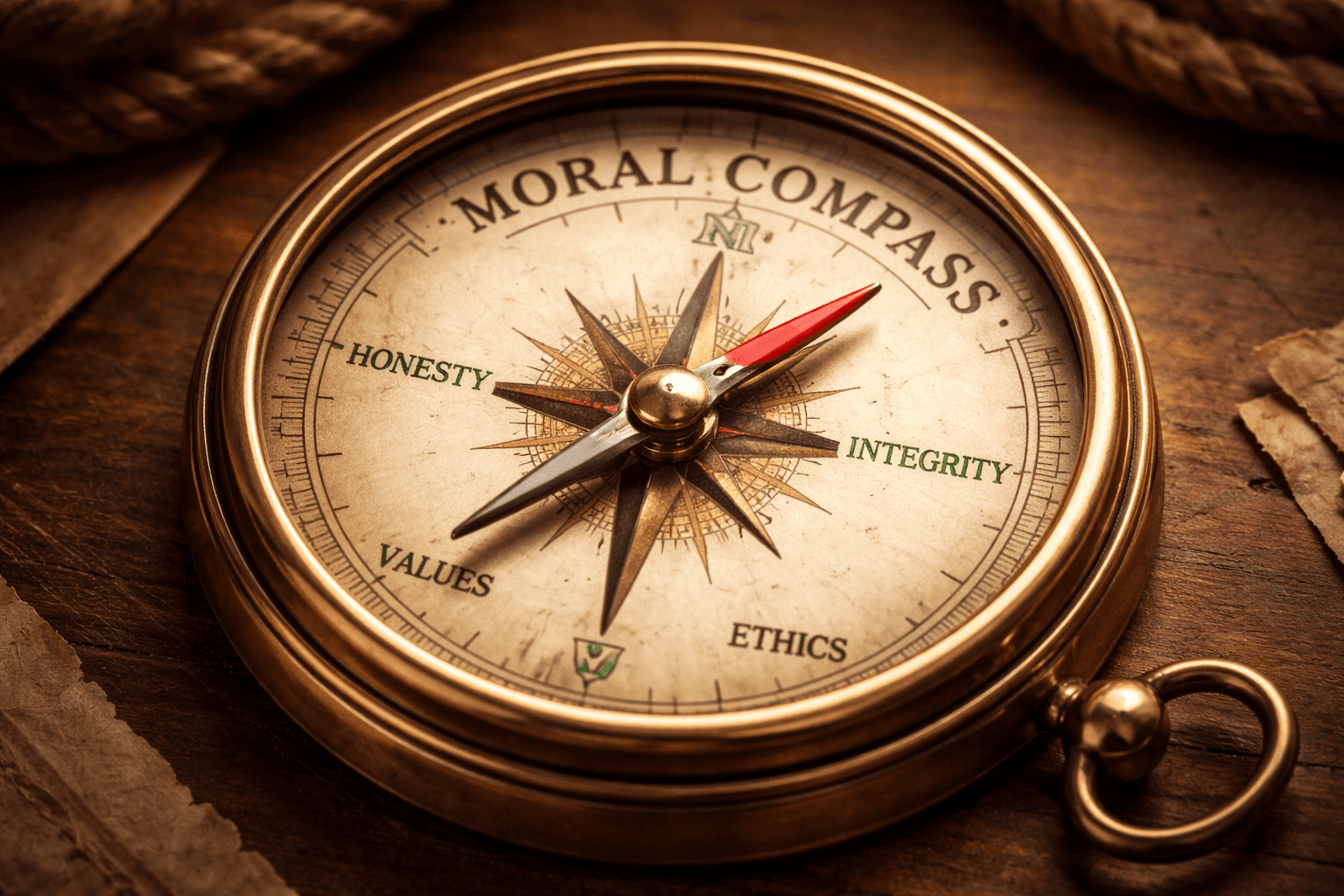
Rebooting Morality: When Individual Freedom Has Expanded Faster Than the Ethical Systems
1. Morality Was Never About Control
Modern debates often frame morality as a mechanism of restriction—rules imposed to limit individual freedom, especially in matters of love, sex, and personal life. This framing is historically inaccurate.
Morality did not emerge to govern society through force. That role belonged to law and, in extreme cases, to violence. Morality evolved for a different reason: to allow large groups of humans to coexist without constant coercion.
Before modern states, before professional police forces, before scalable legal systems, societies relied on shared values to reduce friction. Morality functioned as a coordination layer—a way for people to anticipate one another’s behavior, trust promises, form families, and raise children without continuous enforcement.
In this sense, morality was not a governing system. It was an operating assumption.
2. A Brief History of Moral Evolution
Anthropological evidence suggests early moral norms were tightly coupled to survival. Kinship rules regulated reproduction. Sexual norms stabilized lineage. Fidelity ensured resource allocation. Shame functioned as a low-cost enforcement mechanism in small, visible communities.
As societies grew, religion codified these norms, transforming local customs into universal values. Moral authority became institutional, but its enforcement still depended on visibility and shared belief. One did not need police to enforce fidelity when reputation alone determined social survival.
The Enlightenment shifted moral authority again—from divine command to social contract. Morality became tied to citizenship, family structure, and civic responsibility. Even then, its effectiveness relied on scarcity: limited partners, limited mobility, limited anonymity.
At every stage, morality worked because behavioral choice was constrained by environment.
That environment no longer exists.
3. Technology Didn’t Destroy Morality — It Outran It
The moral confusion of the modern era is often attributed to decadence, permissiveness, or declining values. A more accurate diagnosis is simpler: individual freedom expanded faster than ethical systems could adapt.
Social media, dating platforms, and global connectivity did not change human desire. They changed its scale. A person in the 18th century might meet a few dozen viable partners in a lifetime. A person today can encounter that many in a week—sometimes in a single app session.
This abundance breaks assumptions embedded in traditional moral frameworks. Fidelity presumes scarcity. Shame presumes a stable audience. Reputation presumes continuity. When identities fragment across platforms and contexts, these assumptions collapse.
Morality did not fail. Its operating conditions disappeared.
4. When Law Cannot Replace Shared Values
Modern legal systems are intentionally limited in scope. They regulate violence, fraud, and coercion—but avoid governing desire, intimacy, or emotional harm. This restraint is not a bug; it is a safeguard against authoritarian overreach.
But it creates a vacuum.
As shared moral values weaken, law does not step in to replace them. Nor should it. The result is a society where behavior is legal but ethically unmoored, where harm is real but unaddressed, and where individuals must improvise their own ethical frameworks in private.
This is why modern moral debates feel so personal. Without shared values, every choice becomes an identity statement.
5. Institutions and the Instinct to Preserve the Past
In response, governments, religious organizations, and cultural institutions increasingly position themselves as defenders of “traditional values.” These efforts are often framed as moral necessity: preserving family stability, social cohesion, or national identity.
Yet these preservation attempts reveal a structural mismatch.
Institutions attempt to enforce moral norms that evolved under scarcity, while individuals live in abundance. The result is not compliance, but quiet divergence. Behavior changes first; moral rhetoric follows. When enforcement fails, institutions resort to signaling—statements, policies, cultural posturing—rather than structural adaptation.
This produces polarization rather than harmony. Morality becomes an identity badge instead of a shared substrate.
6. The Moral Lag Problem
Sociologists describe a phenomenon known as moral lag: the delay between technological change and ethical adaptation. We see this pattern repeatedly.
Technology expands what is possible. Individuals adapt pragmatically. Institutions react defensively. Moral discourse intensifies. Behavior continues regardless.
The conflict is not between “moral” and “immoral” people. It is between systems operating at different speeds.
7. From Shame to Narrative
Historically, morality relied on shame because shame was efficient. It required no bureaucracy, no enforcement, only a shared gaze. Social media shattered that gaze.
In its place, narrative emerged. Individuals no longer ask, “Is this acceptable?” They ask, “Is this authentic?” Moral reasoning shifts from communal judgment to personal coherence. Ethics become retrospective, used to justify actions rather than guide them.
This does not produce chaos. It produces moral pluralism without coordination.
8. The Cultural Signal: Bodies, Visibility, and Normalization
The shift from bikinis once being provocative to public movements advocating body exposure is not about sexuality. It is about normalization under visibility. Repetition erodes taboo faster than ethics can recalibrate. When everything is visible, nothing is exceptional—and when nothing is exceptional, moral boundaries lose their signaling power.
This is not liberation or decay. It is adaptation without consensus.
9. What a Rebooted Morality Would Actually Do
A rebooted moral framework would not attempt to restore past norms or legislate desire. It would acknowledge abundance as the baseline condition of modern life.
Such a framework would focus less on purity and more on coordination: reducing harm, aligning expectations, and making implicit assumptions explicit. It would prioritize responsibility over obedience, clarity over shame, and shared understanding over moral absolutism.
Morality’s original purpose was not to judge. It was to make coexistence possible.
Conclusion: Redesign, Not Restoration
Law governs violence. Military force governs security. Morality once governed harmony—not through control, but through shared assumptions that reduced friction.
Those assumptions no longer hold.
The moral crisis of modern society is not that people became less ethical. It is that ethical systems were never redesigned for a world of abundance, visibility, and choice.
The task ahead is not to restore the past—but to reboot morality for the conditions we actually live in.
Read more

The Erosion of Accountability: When Influence Becomes a Marketplace
AI has enabled an explosion of creators and synthetic voices—but without oversight, influence becomes a marketplace where trust erodes and accountability disappears.

Parasocial Intelligence: How AI Characters Become the New Cultural Medium
AI agents are not just tools — they are becoming the next generation of parasocial relationships.

1984 in 2025: What Orwell Got Wrong — and What He Predicted Perfectly
Revisiting 1984 through the lens of AI, algorithmic identity, and the new machinery of digital power.