
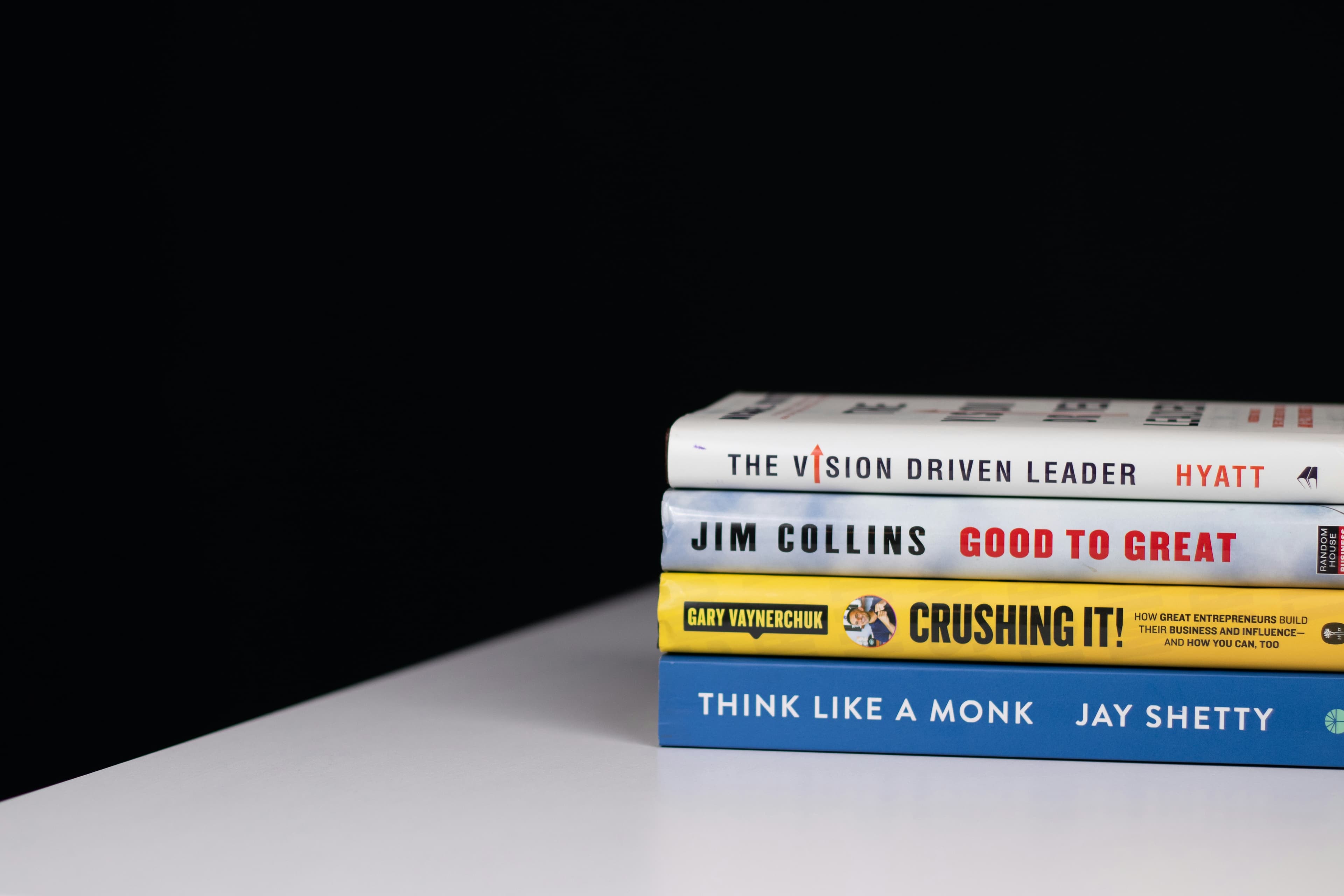
Good to Great in a World That Won’t Sit Still
Jim Collins built the most influential corporate framework of his era.
But his research assumed a world that no longer exists.
Good-to-Great companies were defined by:
- Level-5 leadership
- Hedgehog focus
- Culture of discipline
- The Flywheel
- Sustained advantage
But these ideas depend on one underlying belief:
Stability.
The ability to build momentum over decades.
The ability to hire once and retain forever.
The ability to expand methodically.
The ability to create enduring moats.
The modern AI-driven environment destroys these assumptions.
It’s time to reboot Good to Great.
1. Level-5 Leadership Collapses Under Information Velocity
Collins celebrated leaders who demonstrated:
- humility
- discipline
- long-term stewardship
But modern leadership requires an additional trait:
Interpretive intelligence.
The ability to:
- sense market shifts early
- integrate AI insights
- act decisively under uncertainty
- update strategy continuously
- detect nonlinear patterns
Humility without perception becomes inertia.
Discipline without context becomes rigidity.
The Level-5 leader must become a Level-Context leader.
2. The Hedgehog Concept Fails in Nonlinear Markets
The Hedgehog Concept was built on:
- one core passion
- one core economic engine
- one core competency
But AI shifts market structure so rapidly that:
- passions are commoditized
- economic engines flip
- competencies expire
The modern organization cannot be a hedgehog.
It must be a chameleon — recalibrating constantly while maintaining identity.
3. The Flywheel Is Now a Neural Net
Collins described the Flywheel as:
“Thousands of small pushes, each building momentum.”
But momentum behaves differently when:
- feedback cycles compress
- product iteration is instant
- competitors adapt automatically
- user preferences shift weekly
- AI models generate infinite micro-experiments
Modern companies don’t build one flywheel.
They operate multiple interconnected loops, like a neural network.
Synergy emerges from system behavior, not singular momentum.
4. Sustained Competitive Advantage Is Dead
Collins defined great companies by their ability to maintain advantage for decades.
AI ends that era.
Today:
- moats erode instantly
- data advantage is temporary
- distribution is democratized
- innovation is copyable
- switching costs shrink
Advantage is no longer sustained.
It is regenerated.
Great companies do not defend moats —
they rebuild them in continuous cycles.
5. The New Good → Great Framework (2025 Edition)
1. Perception
See the system clearly through human judgment + AI augmentation.
2. Adaptation
Update continuously, not cyclically.
3. Synthesis
Turn noise into insight faster than competitors.
4. Regeneration
Rebuild advantages as they decay.
5. Velocity
Move at a pace the environment requires, not tradition allows.
Greatness is no longer a destination.
It is a practice.
The Reboot
Collins studied a world that rewarded slow compounding.
We now operate in a world that rewards fast recognition.
Good to Great still holds wisdom —
but not the wisdom he intended.
The modern path from good to great is not discipline alone,
but contextual intelligence.
Great companies once built unshakeable foundations.
Today they build dynamic systems.
Greatness used to mean endurance.
Now it means responsiveness.
The future belongs to companies that don’t just build flywheels —
but learn how to reboot them continuously.
Read more
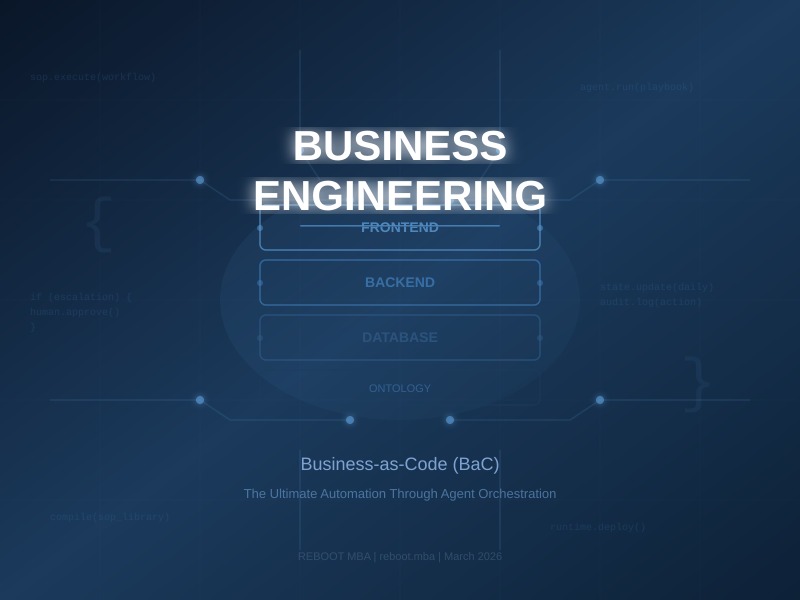
Business Engineering: Business-as-Code (BaC) — The Ultimate Automation Through Agent Orchestration
A research paper on the feasibility of AI-era Full-Stack Business Engineering. Every business is a codebase. SOPs are source code. AI agents are the runtime. This paper introduces Business Engineering as a formal discipline and Business-as-Code as its foundational methodology.

Can Due Diligence Be Computed? Capital Allocation After Knowledge Scarcity
As AI collapses the cost of evaluation and execution, the foundations of venture capital and institutional investing come under pressure. What remains scarce when judgment becomes computational?

From Profiling to Recommendations: The Shift From Attention to Memory in the Age of AI
As AI agents replace search and feeds with delegated decision-making, digital commerce shifts from profiling attention to owning memory. This transition rewrites incentives, concentrates power, and raises unresolved questions about trust, autonomy, and governance.