
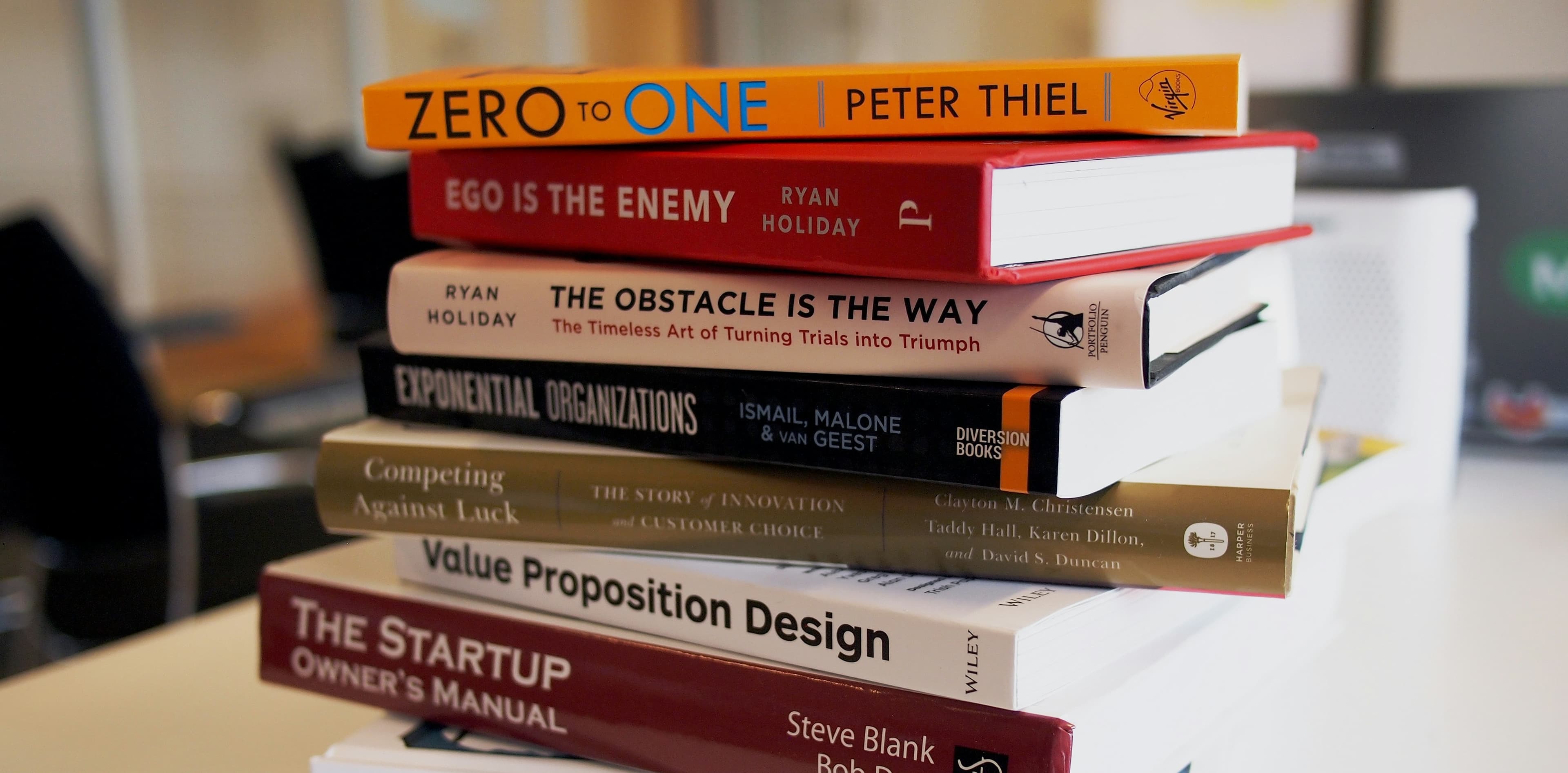
Zero to One in a World of Infinite Models
Peter Thiel’s iconic argument was simple: competition is for losers.
The goal is to build a monopoly — by knowing something others do not.
But the foundation of Zero to One rests on one assumption:
Secrets exist.
In 2014, this was true.
In 2025, this is debatable.
AI collapses information asymmetry.
Secrets no longer hide in the dark; they hide in plain sight — inside models trained on everything.
Thiel’s philosophy isn’t wrong.
But the mechanism for going from zero to one has changed.
It’s time to reboot Zero to One.
1. Secrets No Longer Live in People — They Live in Data
Thiel defined secrets as:
- truths that nobody believes
- overlooked truths
- unexplored opportunity spaces
But AI aggressively discovers:
- overlooked markets
- anomalous demand patterns
- unclaimed long-tail niches
- unmet user intent
- unexplored combinatorial products
What used to be discovered by contrarian intuition
is now surfaced by model-driven inference.
The new “secret” is not what you know.
It is how you interpret what the model reveals.
2. Monopolies Form Faster — and Collapse Faster
Zero-to-One monopolies used to endure because:
- data took years to accumulate
- distribution was slow
- competition lagged
- switching costs were high
AI breaks all four.
Today:
- data compounds instantly
- distribution is frictionless
- competitors generate copycat products in hours
- switching costs are algorithmically reduced
The new monopoly is not possession, but velocity.
A company becomes a monopoly not because it cornered a market,
but because it understands the market faster than anyone else.
3. What Thiel Called “Technology” Is Now “Model Weight”
In Zero to One, technology = doing more with less.
In 2025, technology = model capability.
This means:
-
If everyone can run powerful models,
the advantage shifts to how you apply them. -
If everyone can generate output,
the advantage shifts to context and interpretation.
A good founder used to ask:
What technology lets us create disproportionate value?
A modern founder must ask:
What tailored intelligence lets us generate disproportionate understanding?
4. The New Contrarian Question
Thiel gave the famous prompt:
“What important truth do very few people agree with you on?”
In an AI world, the better question is:
“What important truth does the algorithm misinterpret — and why?”
Because the next great company will not be built by ignoring convention,
but by seeing where models fail.
That is the new contrarian insight.
5. The New Zero → One Pathway
The old path:
- Find a secret.
- Build proprietary tech.
- Capture a niche.
- Expand outward.
The new path:
- Sense overlooked patterns via models.
- Simulate multiple markets, products, and scenarios.
- Synthesize insight humans alone can’t see.
- Ship faster than competitors can adapt.
Zero to One used to be an act of genius.
Now it is an act of perception.
The Reboot
Thiel taught us that monopoly creation is the essence of innovation.
AI teaches us something new:
Insight is the new secret.
Interpretation is the new monopoly.
Velocity is the new moat.
In a world of infinite models,
going from zero to one requires rewiring how we think,
not just what we build.
The next great companies won’t win by hiding secrets —
but by seeing more deeply, and synthesizing more intelligently,
than anyone else.
Read more
Business Engineering: Business-as-Code (BaC) — The Ultimate Automation Through Agent Orchestration
A research paper on the feasibility of AI-era Full-Stack Business Engineering. Every business is a codebase. SOPs are source code. AI agents are the runtime. This paper introduces Business Engineering as a formal discipline and Business-as-Code as its foundational methodology.

Can Due Diligence Be Computed? Capital Allocation After Knowledge Scarcity
As AI collapses the cost of evaluation and execution, the foundations of venture capital and institutional investing come under pressure. What remains scarce when judgment becomes computational?

From Profiling to Recommendations: The Shift From Attention to Memory in the Age of AI
As AI agents replace search and feeds with delegated decision-making, digital commerce shifts from profiling attention to owning memory. This transition rewrites incentives, concentrates power, and raises unresolved questions about trust, autonomy, and governance.